

Navigating the world can be a challenge for individuals with special needs, especially when it comes to transportation. Accessible and reliable transport options are crucial for ensuring they can reach essential services, participate in community activities, and enjoy a fulfilling life. Special needs transportation isn’t just about getting from point A to point B; it’s about fostering independence and inclusivity.
With a growing emphasis on accessibility, various solutions have emerged to meet these unique needs. From specialized vehicles to trained drivers, the landscape of special needs transportation is evolving. Understanding these options can empower families and caregivers to make informed decisions, ensuring safe and comfortable travel for those they love.
Overview of Special Needs Transportation
Special needs transportation addresses the mobility requirements of individuals with disabilities. It encompasses various services designed to facilitate safe and reliable travel for those with unique challenges. Services include accessible vehicles, trained personnel, and specialized routes, all tailored to meet diverse needs.
Types of transportation options comprise:
- Paratransit Services: These services offer door-to-door transportation, accommodating individuals who cannot use traditional public transit. Accessible vans and buses provide the necessary support.
- Non-Emergency Medical Transportation (NEMT): NEMT services assist individuals traveling to and from medical appointments. These trips ensure that healthcare access remains a priority.
- School Transportation Programs: Many school districts provide specialized transportation for students with disabilities, ensuring safe and efficient travel to and from school.
Elements that enhance special needs transportation involve:
- Vehicle Modifications: Specially designed vehicles feature ramps, lifts, and securement systems to ensure safety and comfort during travel.
- Trained Drivers and Personnel: Professionals undergo training to handle various disabilities, ensuring that passengers receive the appropriate assistance needed for a secure journey.
- Technology Integration: Mobile apps and GPS tracking systems improve coordination and communication, increasing efficiency in transportation services.
Understanding special needs transportation options helps families and caregivers to choose suitable solutions. Accessing these services promotes independence and integrates individuals into the community.
Types of Special Needs Transportation Services
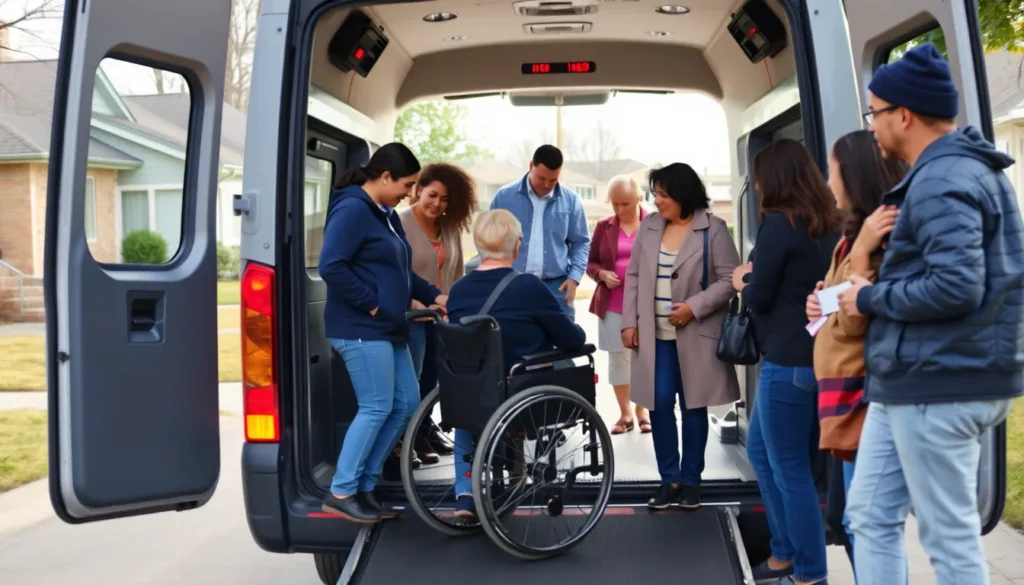
Special needs transportation services encompass various options tailored to support individuals with disabilities. These services enhance mobility and foster inclusion in community life.
Paratransit Services
Paratransit services provide accessible transportation for individuals unable to use conventional public transit. Typically offered through local transit agencies, these services include door-to-door rides, ensuring safe and reliable transport. Drivers receive specialized training in assisting passengers with mobility challenges. Vehicles used in paratransit services often feature wheelchair lifts, secure tie-downs, and spacious interiors to accommodate diverse needs. Passengers can schedule rides in advance, often using a convenient phone app or website.
School Transportation Options
School transportation options cater specifically to students with special needs, ensuring safe travel to and from educational facilities. These services may involve modified school buses equipped with safety features such as wheelchair ramps and specialized seating. Trained staff, including transportation aides, accompany students to provide assistance during transit. Many school districts collaborate with parents and caregivers to create Individualized Transportation Plans (ITPs) that address specific needs and ensure a tailored travel experience for each child.
Benefits of Special Needs Transportation
Special needs transportation significantly enhances mobility for individuals with disabilities. This transportation approach prioritizes accessibility, safety, and inclusivity, ensuring those with special needs can travel with comfort and confidence.
Accessibility and Inclusion
Accessibility remains a primary benefit of special needs transportation. Paratransit services provide door-to-door assistance, accommodating individuals who cannot use conventional public transit. Customized vehicles feature ramps and lifts, ensuring passengers can easily enter and exit. Programs often employ trained drivers adept at assisting individuals with various disabilities. Community participation improves, as accessible transportation options remove barriers that historically limited involvement in social, educational, and recreational activities.
Safety Considerations
Safety represents a crucial focus in special needs transportation. Vehicles undergo modifications to enhance passenger safety, including securing wheelchairs and employing safety restraints. Trained personnel receive education on handling medical emergencies and assistance. Companies often utilize technology for real-time tracking and communication, providing families with peace of mind during travel. Compliance with regulations further ensures vehicles meet safety standards, protecting passengers throughout their journey.
Challenges in Special Needs Transportation
Special needs transportation faces various challenges that impact service availability and accessibility. Key areas include funding, resource allocation, and driver training.
Funding and Resource Allocation
Funding shortages hinder the growth and efficiency of special needs transportation services. Agencies often struggle to allocate sufficient resources for vehicle modifications, staff training, and operational costs. Inadequate budgets lead to limited service hours and routes, which may restrict access for individuals with disabilities. According to a report from the National Academies of Sciences, Engineering, and Medicine, less than 25% of public transit agencies in the U.S. prioritize special needs transportation in their budgets. This lack of dedicated funds decreases the ability to offer comprehensive and reliable services, affecting the quality of transport for those who rely on them.
Driver Training and Regulations
Driver training and regulatory compliance represent critical challenges in special needs transportation. Many drivers lack proper training specific to the needs of passengers with disabilities. Insufficient education on handling mobility devices, medical emergencies, and effective communication with passengers can compromise safety and comfort. Current regulations vary by state, leading to inconsistencies in training standards for drivers. The Federal Transit Administration (FTA) outlines best practices, yet many agencies do not adhere to these guidelines fully. Enhanced training programs and standardization of regulations are essential for ensuring a safe and satisfying travel experience for all passengers.
Future Trends in Special Needs Transportation
Innovations in technology continue to shape the future of special needs transportation. Implementations of advanced software solutions simplify scheduling and enhance communication for drivers and passengers. Automated systems help manage ride requests in real-time, ensuring efficient allocation of vehicles tailored to individual needs.
Electric and autonomous vehicles also play a significant role in this evolution. Electric vehicles reduce emissions and operational costs, while autonomous vehicles offer the potential for increased independence among individuals with disabilities. Studies show that nearly 20% of adults with disabilities express a desire for self-driving options, which could lead to greater mobility.
Partnerships between public transit agencies and private service providers are becoming more common. Collaborations facilitate resource sharing, improving service quality and expanding route options. These alliances aim to fill service gaps in underserved areas, ensuring comprehensive transportation solutions.
Increased awareness surrounding inclusivity and accessibility drives policy changes at local and federal levels. Advocacy groups push for improved regulations and support for special needs transportation funding, leading to greater investment. Reports indicate that enhanced funding could improve service provision for over 7 million individuals with disabilities across the U.S.
Finally, training for drivers is receiving renewed focus. Implementation of standardized training programs equips drivers with essential skills for assisting passengers with diverse needs. Enhanced training leads to safer and more compassionate service, improving overall travel experiences for individuals with disabilities.
Special needs transportation plays a vital role in ensuring individuals with disabilities can access essential services and engage in community life. The advancements in specialized vehicles and trained personnel are making significant strides toward fostering independence and inclusivity.
As technology continues to evolve and awareness grows, the future of special needs transportation looks promising. Enhanced funding and improved driver training will be crucial in overcoming existing challenges and expanding service availability.
By prioritizing these elements, communities can create a more accessible environment for everyone, ultimately enriching the lives of individuals with special needs and promoting their full participation in society.

